

Scientific Overview
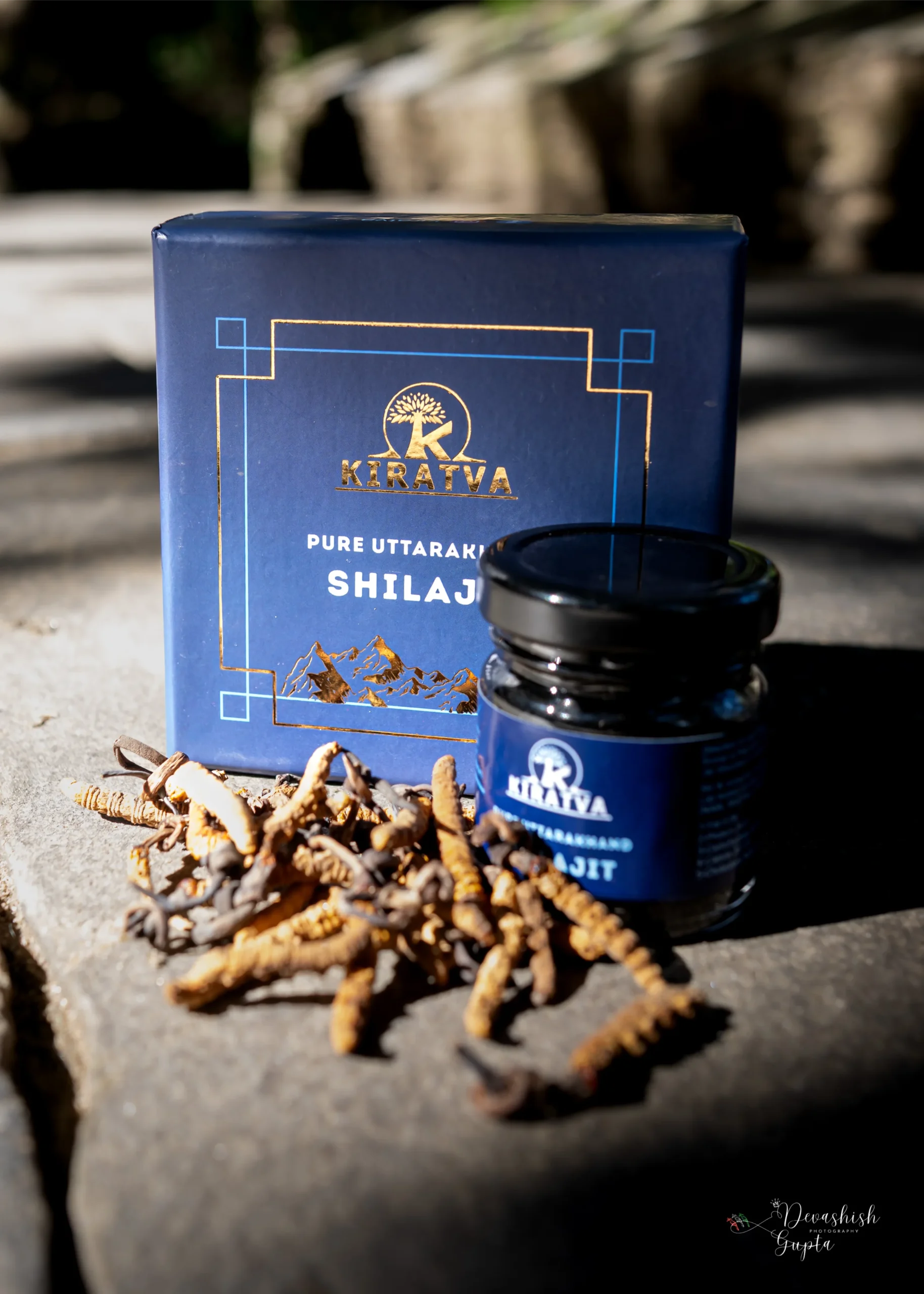
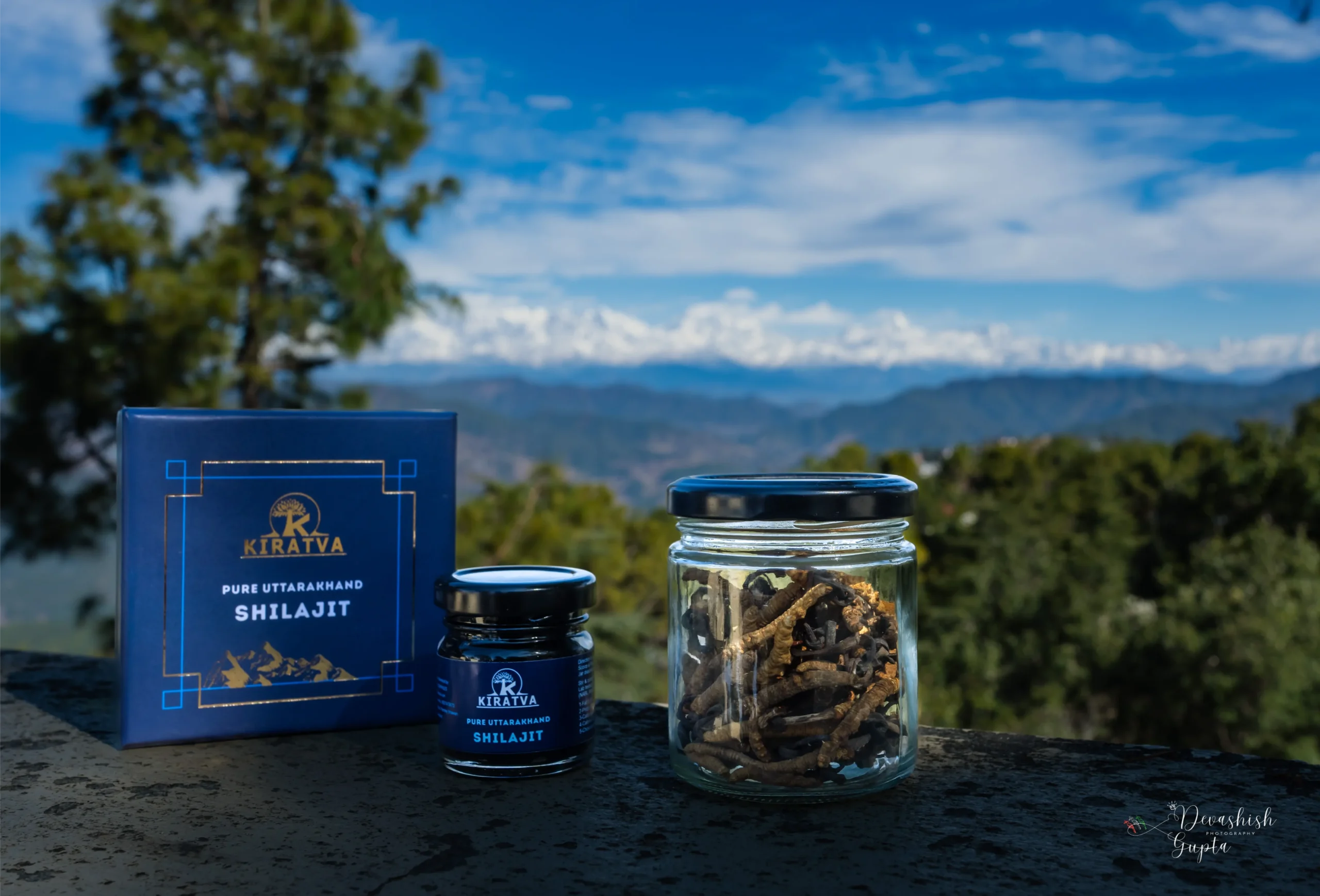
Cordyceps sinensis sourced from the Ralam Glacier region of Munsyari, Uttarakhand, represents a high-altitude Himalayan strain growing under extreme alpine conditions characterized by low oxygen pressure, sub-zero temperatures, and mineral-rich glacial soil. These environmental stress factors are known to enhance the synthesis of bioactive secondary metabolites.
Laboratory analyses of Himalayan Cordyceps typically report the presence of:
Cordycepin (3′-deoxyadenosine)
Adenosine and related nucleosides
β-glucan polysaccharides
Sterols, peptides, and trace minerals
The natural parasitic growth cycle on ghost moth larvae (Thitarodes spp.) ensures a complete and authentic biological formation, distinguishing wild Himalayan Cordyceps from cultivated substitutes.
—
Ayurvedic Perspective
In Ayurvedic literature, Cordyceps sinensis is classified as a Rasāyana dravya, traditionally associated with:
Balya (strength-supporting)
Vṛṣya (vitality-enhancing)
Ojas-vardhaka (supporting vital essence)
Its Uṣṇa vīrya (warming potency) and Madhura-Tikta rasa are traditionally used to support:
Prāṇa and respiratory efficiency
Physical endurance and adaptation to fatigue
Agni balance and metabolic resilience
Cordyceps from the Himalayan glacier belt is especially valued due to its Prakṛti-sambandha (natural environmental synergy), which is believed to enhance its Rasāyana potential.
—
Quality Characteristics
Wild-collected from high-altitude alpine meadows
Intact caterpillar body with naturally emerged fruiting stalk
Dense texture, earthy aroma, and uniform morphology
Free from industrial contamination due to remote glacial origin
—
Processing & Handling
Naturally sun-dried at high altitude
No chemical processing or irradiation
Hand-sorted and graded
Stored under controlled temperature and humidity conditions
Reviews
There are no reviews yet.